Molykote: 77 years of efficient lubrication technologies
Since 1948 Molykote lubrication technologies successfully helped to solve the most complex problems in tribology application.
Sometimes called “magic lubricants”, Molykote lubricants were originally based on the use of molybdenum disulphide as a component that could be combined with a wide range of base oils: from mineral to fully synthetic.
The discovery of a new mineral – molybdenite 281 years ago in 1744 were discovered unique antifriction characteristics of an unknown mineral. Due to outward similarity with lead and galena (lead sulfide), this mineral was called molybdos, which in Greek means "similar to lead."
In 1778 the Swedish scientist Carl Wilhelm Scheele identified molybdenite as a metal sulphide by heating it to obtain a white oxide powder. Another Swedish scientist Peter Jacob Hjelm successfully identified this metal in 1782 and called it molybdenum.
This discovery remained non-demanded because of in nature molybdenum occurs only chemically related to other elements. Only in 1890 due to beginning of the industrial production of steel this mineral was used to replace tungsten upon alloy addition. A large molybdenite deposit was discovered in the mountains of Colorado (USA), and its extraction and processing started. Today large molybdenite resources are available around the world in the USA, China, Chile and Russia.
New properties of lubricants In 1935 the unique lubricating properties of molybdenite found their application. Alfred Sonntag, an engineer of German origin, developed a test station about 20 m high to simulate aircraft vibrations. However the first launch was unsuccessful due to the appearance of a stick-slip behavior in the parts of the heavily loaded friction units of the installation. No available lubricant could solve this problem. In descriptions dating back to the 18th century, Sonntag found references to molybdenite and in practice discovered new properties of lubricant under extreme operating conditions.
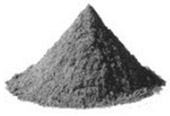
In 1940 Sonntag founded the Sonntag Scientific Corporation to study and develop lubricants based on molybdenum disulphide. Sonntag Scientific has developed methods for purifying molybdenite from quartzite impurities and producing pure molybdenum disulphide (MoS₂) lubricating powder.
Sonntag Scientific sent more than 4,000 samples of Alfred Sonntag’s “miracle” lubricating powder to research institutes and laboratories for evaluation and potential commercialization. The response was overwhelmingly positive.
Molykote world’s debut In 1948 Sonntag established Alpha Molykote in Stamford, Connecticut (USA).
The name of the company was formed from the combination of the words "moly-coating" (disulfide molybdenum coating).
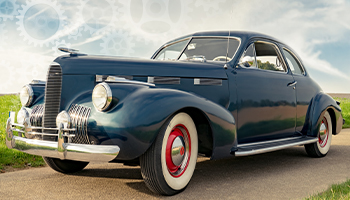
Sonntag once demonstrated the “magic” lubricating abilities of MoS₂ by draining all the oil (which contained a small amount of MOLYKOTE®) from the crankcase of his car and driving the car for several miles, with no damage to the engine.
Alpha Molykote was the first company in the world to produce lubricants based on molybdenum disulphide. These materials worked efficiently under extremely high loads, under high and low temperatures, effectively prevented fretting, scoring and increased wear. They provide long-term lubrication under the influence of dust and abrasive, when traditional oils and greases are not applicable.
At the same time the following types of Molykote lubricants were presented: powders for use as an additive to composite and sintered bearing materials, high temperature pastes for threaded and splined joints, press fit joints and furnace bearings, greases for high-loaded bearings, dispersions - for addition to gear oils, antifriction coatings - for aircraft parts.
Powders are dispersed particles of a solid lubricant with a high bearing capacity, antifriction properties, thermal stability and chemical inertness. Pastes are mixtures of powders and various types of oils for applications where solid lubrication and corrosion protection is necessary. Plastic greases are similar to pastes, but are designed specifically for high loads and long-term lubrication.
Dispersions are solid lubricant particles suspended in oil. They are used as antiwear and extreme pressure additives to conventional lubricants. Antifriction coatings are compositions of solid lubricants with organic or inorganic binders and solvents, used to effectively protect against wear where other lubricants are inoperative.
1950s: move to success In 1950 Alpha Molykote created a network of distributors in different parts of the world: among them were Molykote KG in Germany and a Mitsubishi trading company in Japan. In 1955 the disulfide molybdenum demand exceeded the forecasted in 1952 by experts from the Munich Spengler Institute. In the mid of 1950, Molykote KG put into operation its own production facilities and packaging lines, organized a research laboratory. By the end of the decade Molykote GmbH serviced more than 12,000 customers and had partner relations with 19 distributors in other countries.
1960s: changes and growth In the 1960s a significant increase in sales in Europe was mainly due to the activities of Molykote GmbH and its aggressive marketing.
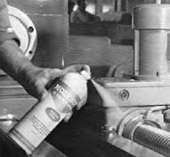
Molykote GmbH organized technical seminars for specialists, came up with the idea of creating Molykote G-Rapid Spray, the first lubricant paste based on molybdenum disulphide in aerosol packaging. Later, Molykote GmbH built a new factory in Munich to produce licensed products.
At the same time, other new products appeared in the Molykote line - bright pastes for "clean" grease, lubricants for metal working with pressure and self-lubricating composites. In addition the introduction of new solid lubricants - sulfides, fluorides, metal phosphates, graphite and finely divided metallic powders.
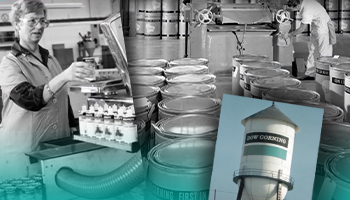
In 1964, Alpha Molykote was sold to Dow Corning Corporation – a pioneer in silicone chemistry, a leading manufacturer and a major supplier of lubricating materials for special applications.
The superior load-carrying capabilities of Alpha Molykote’s heritage solid-film lubricants were the perfect complement to the high-temperature capabilities of Dow Corning’s silicone and fluorosilicone lubricants. This led to the development of a successful moly-silicone lubricant for high-temperature applications.
Other solid lubricants, such as metal sulfides, metal fluorides, metal phosphates, graphite and other powdered metals, were found to have synergistic effects with MoS2 and became the basis for new MOLYKOTE® branded products.
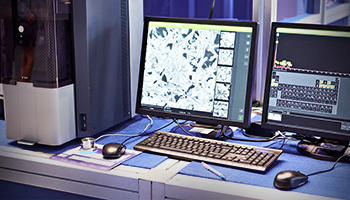
1970s: new research and globalization In the 1970s, as we were approaching our 30th anniversary, scanning electron microscopy revealed that the excellent lubricating properties of molybdenum disulfide were due to its ability to fill rough metal surfaces with a thin film of “slippery” sliding planes, which adhered strongly, provided an ultralow coefficient of friction and withstood extremely high pressures.
During this time, we introduced pastes and anti-friction coatings that allowed alternative application methods, friction control additives for brake pads and linings, and MOLYKOTE® “plus” greases.
1980s: New Opportunities and Strategic Partnership During the 1980s, MOLYKOTE® continued our 30+ year history of expanding our lubricant product portfolio.
Further strengthening of the Molykote brand was due to the new production facilities in Japan (Yamakita). This also caused a significant increase in the use of Molykote lubricants in the automotive industry. A strategic partnership was established with many automakers.
We introduced water-based and oil-resistant coatings, advanced silicone greases, Lubolid® additives for asbestos-free brake pads, and some wear-reducing products with no lubricating properties at all.
During this time, more plastics were being used as design materials, so we added greases for plastics to our expansive lines of specialty lubricants.
1990s: Even more opportunities
In the 1990s Molykote lubricants were even more successful.
Molykote's branding has mastered the markets of Eastern Europe. A fundamental work has been published for engineers and technicians, summarizing more than 40 years of Molykote research and development experience. The MOLYKOTE® team continued to develop new lubricants:
An oil-resisting piston coating that delivered lifetime lubrication
Unique “polarized graphite” additives for replacing lead compounds in clutch linings and reducing noise in brake pads
Patented anti-friction coating technology for many “anti-squeak” automotive applications
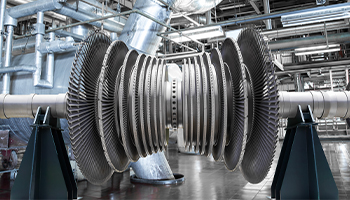
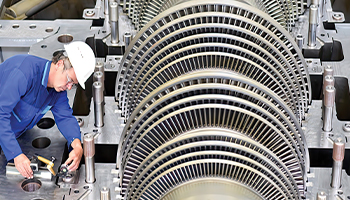
A MOLYKOTE® paste that was specified and globally implemented for lubricating threaded connections in aviation and power plant turbines, leading to other lubricant pastes for threaded connections in plastic molding machines and eco-friendly, corrosion-resistant railway connectors.
We also continued to expand our global footprint. With labs and production facilities not just in the U.S. but around the world – including in Wiesbaden, Germany, and Yamakita, Japan – we began to set up our full tribological labs in Shanghai, China.
2000s: Successes in the new millennium
A new millennium meant a fresh take on the MOLYKOTE® vision!
Like it was for many, the transition to the new century was a time of reflection, forward thinking and new purpose for MOLYKOTE®. In the 2000s, we captured our vision with the phrase “MOLYKOTE® is Smart Lubrication™,” which we felt characterized the key attributes of our brand:
Lubrication experts who solve problems with valued solutions
Known and trusted worldwide: “When it has to work, it has to be MOLYKOTE®”
A full range of lubrication products, services, solutions and channels
Proven products, global supply, and local support and expertise to help users work smarter
appearance of 42 new products in the line of synthetic and mineral oils for industrial equipment, including food industry;
the creation of a laboratory in China (2007);
production development in India and Japan;
a global network of more than 3,000 partners worldwide.
2016: Joined The Dow Chemical Company When Dow acquired Corning’s stake in Dow Corning on June 1, 2016, we became a part of Dow. And then on August 31, 2017, Dow merged with DuPont– paving the way for our eventual home within DuPont.
2019: Joined DuPont; leveraged expertise & technology
With the addition of DuPont's technologies and expertise when we joined the company in 2019, we became even better positioned to create solutions for emerging trends.
MOLYKOTE® expanded our collective understanding of polymer-grease compatibility under diverse conditions, which allowed customers to select products faster and move through evaluation more smoothly.
2020s: Focused on sustainability & emerging trends
Over the years, we’ve kept a watchful eye on market needs and trends – including the move toward a more sustainable and healthier world.
For example, threaded connections in high-temperature-operating applications such as turbines and turbochargers require health-friendly lubrication to avoid seizing and to provide proper tightening torque. We developed MOLYKOTE® P-3700 Anti-Seize Paste to meet the demands of a wide service-temperature range of -30°C to 900°C while also being equipped with a hazard-free label.
Our lubricants also have evolved to support applications that contribute to vehicle lightweighting, help protect new battery technology and support the move toward more renewables. We’ll continue to find new ways to tackle tough lubrication challenges while meeting market demands.
2023: MOLYKOTE® 75th anniversary 2023 = 75 years of application-matched Smart Lubrication™ solutions. We’ve come so far from our beginnings, when Alfred Sonntag introduced the world’s first molybdenum disulfide (MoS₂) lubricants!
Today, we offer a variety of fully formulated lubricant technologies that help tailor our specialty lubricants to your specific needs.
FUTURE: Looking ahead As we look toward the future, MOLYKOTE® will work with customers to anticipate their needs as technology changes. Plus, we understand that the future needs to be sustainable, and we want to support a healthier, greener future.
Whether we’re developing Smart Lubrication™ solutions for electrification and autonomous functionality of xEVs, for next-generation renewable energy technology, or for advanced manufacturing, our technicians will continue to innovate and deliver high-performance specialty lubricants that protect key components of advanced materials and enable design flexibility.